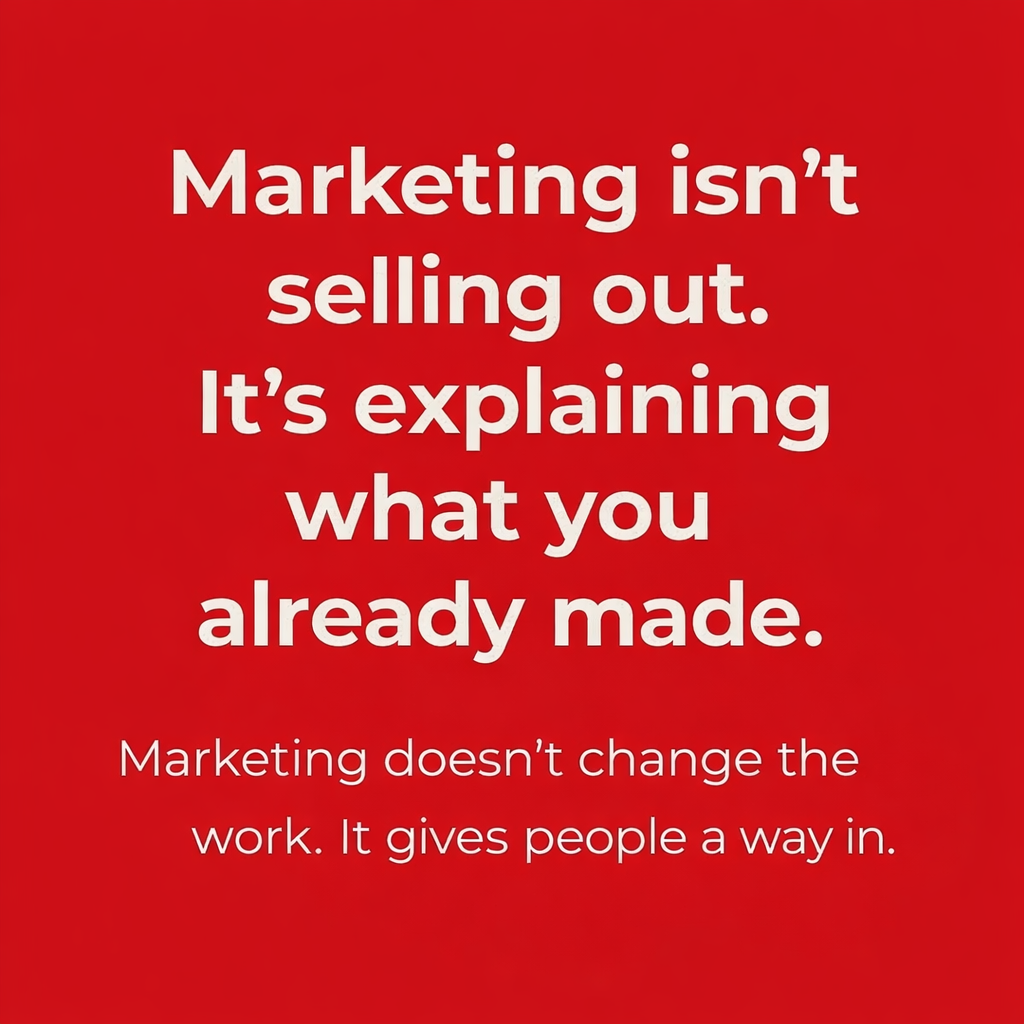
Somewhere along the way, marketing got framed as the enemy of art.
Marketing is “selling out.”
Marketing is “watering it down.”
Marketing is what you do after the real work is finished.
These ideas are deeply embedded in arts culture. They’re often learned early, reinforced quietly, and rarely questioned. And while they’re understandable, they’re also untrue — and costly.
Believing marketing is opposed to art doesn’t protect the work. It makes the work harder to share.
What marketing actually does
At its best, marketing doesn’t change the art. It translates it. Good marketing creates context. It reduces uncertainty. It helps people understand what they’re being invited into — emotionally, intellectually, and practically. It answers questions audiences are already asking: What kind of experience is this? Is it for someone like me? Do I need to know anything before I arrive? When those questions go unanswered, people don’t assume the work is bold or complex. They assume it isn’t meant for them.
Why the tension won’t go away
Marketing asks uncomfortable questions — especially for artists and arts organizations: Who is this really for? Why does it matter right now? What do people need in order to say yes?
These can feel like compromises, or worse, like pressure to simplify or justify the work. But in practice, they’re clarity exercises. They don’t ask you to dilute the work — they ask you to understand it well enough to talk about it honestly. Avoiding these questions doesn’t preserve integrity. It just delays the reckoning.
The quiet cost of resistance
When marketing is treated as a necessary evil, a few things reliably happen: It gets rushed. It gets under-resourced. It gets handed to the least-experienced person on the team. And when things don’t sell, it gets blamed. Meanwhile, the work itself hasn’t changed — and it still deserves an audience.
This is how good projects disappear quietly. Not because they weren’t strong, but because no one helped people find their way in. A better way to think about it Art and marketing are not opposing forces. They are collaborators with different responsibilities.
Art creates meaning.
Marketing creates access.
When marketing feels painful, it’s often because it’s disconnected from the why of the work — from the values, questions, or urgencies that made it necessary in the first place.
Reconnect those, and marketing stops feeling like translation by committee. It starts feeling like an invitation. And invitations, when done well, are generous — not compromising.
Leave a Reply